



Book One · The Horizon Cases
“The apartment was clean. The mother was sober. The report was a lie. The system took her daughter anyway.”
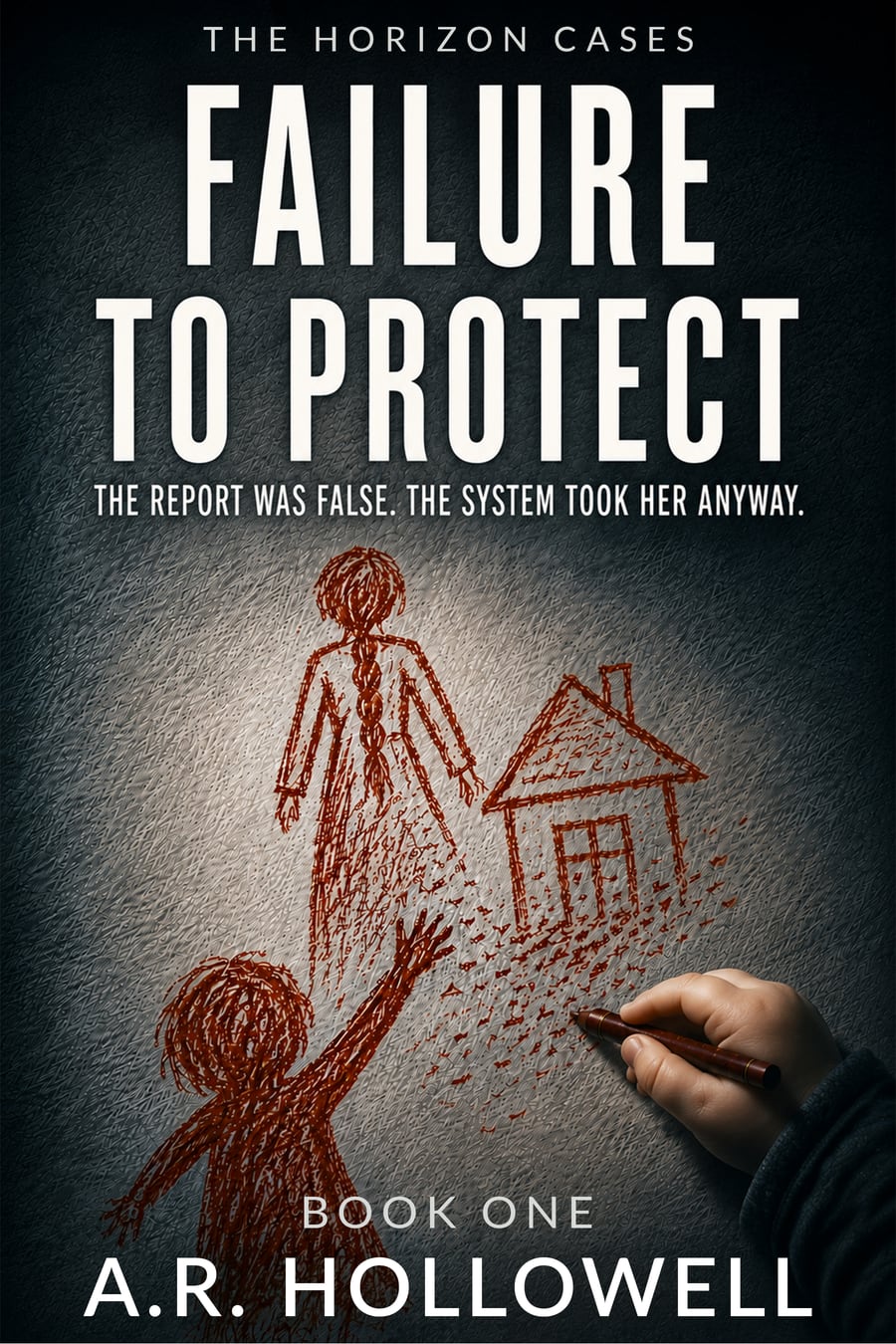
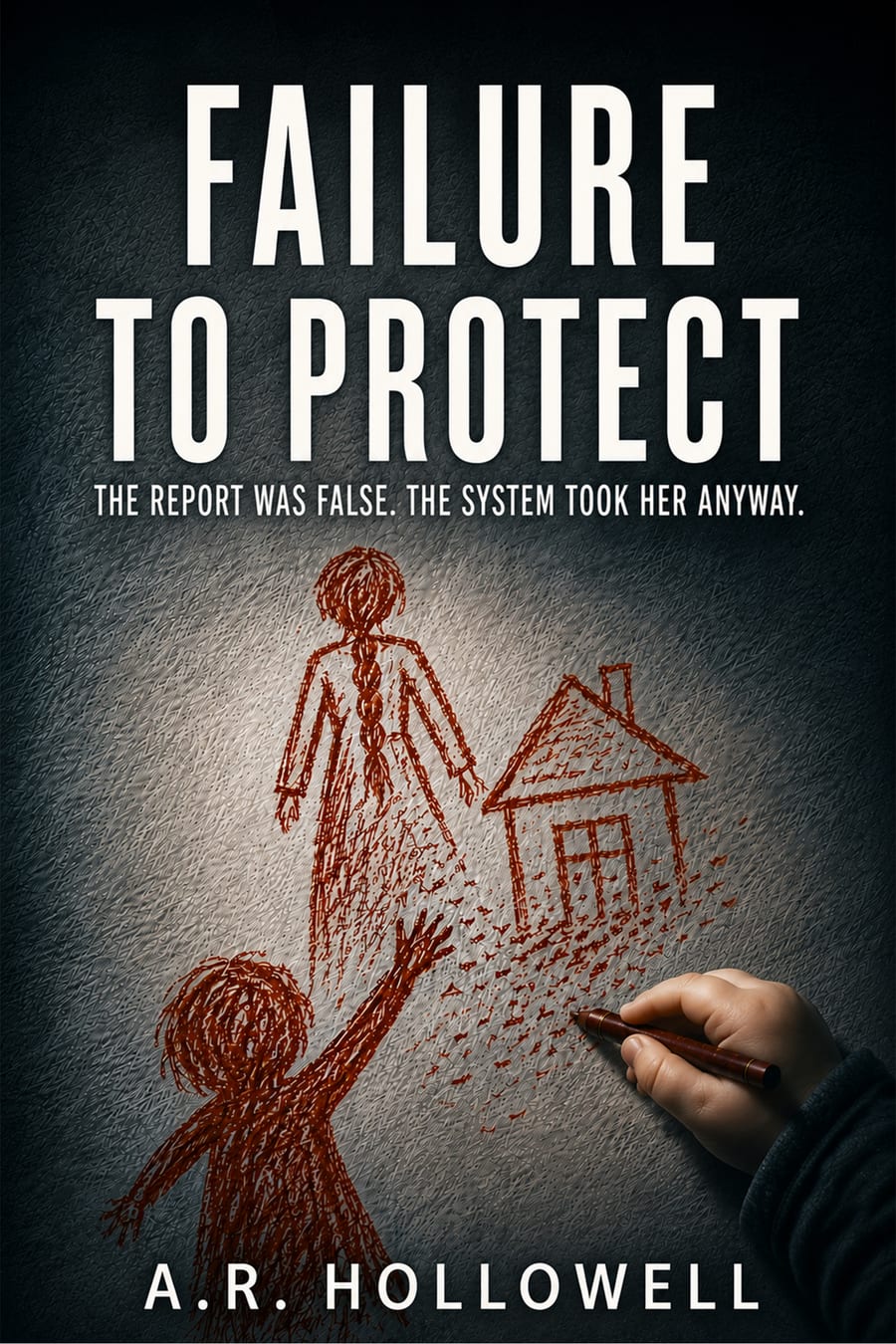
Failure to Protect
Book OneThe Horizon CasesA.R. Hollowell
“The apartment was clean. The mother was sober. The report was a lie. The system took her daughter anyway.”
Listen to the blurb
0:00/1:40
Chicago caseworker Nadia Cole knocks on four-year-old Alma Varela’s door and finds two braids that match her mother’s, a refrigerator gallery of crayon drawings, and a gray stuffed rabbit named Conejo with one torn ear. Nadia knows a home in trouble from a home being performed. This one is just a family.
The anonymous report says neglect, but everything Nadia sees says the opposite. So she writes it up unfounded, twice.
Then a third report comes, and the system stops asking whether it’s true.
Nadia can prove the call was false, down to the invented black eye. Still, her supervisor states the order: “The child goes first, and the truth comes second.” The removal is set for morning, with a bed waiting in a stranger’s house in Oak Park.
Nadia promises to stand back. But by morning, she must break that promise or keep it: block the door and lose her job while the removal goes ahead anyway, or watch another caseworker carry Alma down the stairs, her rabbit left on the rug where no one thinks to pick it up.
A gripping psychological thriller about false reports, a family torn apart by the system meant to protect it, and a caseworker who refuses to let go.
Failure to Protect is Book One of The Horizon Cases series.
For fans of Jodi Picoult, Lisa Jewell, and Lisa Scottoline.
Get your copy
Save it on GoodreadsKindle: read free with Kindle Unlimited · Signed by hand, U.S. delivery · Save on Goodreads
At a glance
- Tense child-welfare thriller
- Child welfare
- The false report
- Family versus the record
- Institutional thriller
- Wrongful removal
Failure to Protect
$0.99Kindle
- Pages
- 270
- Published
- August 25, 2026
- ISBN
- 979-8-9968995-0-0
- Publisher
- Armitage Press
- Series
- The Horizon Cases · Book One
The complete series
Also in The Horizon Cases
- You are here
Book One
Failure to Protect
Kindle Unlimited 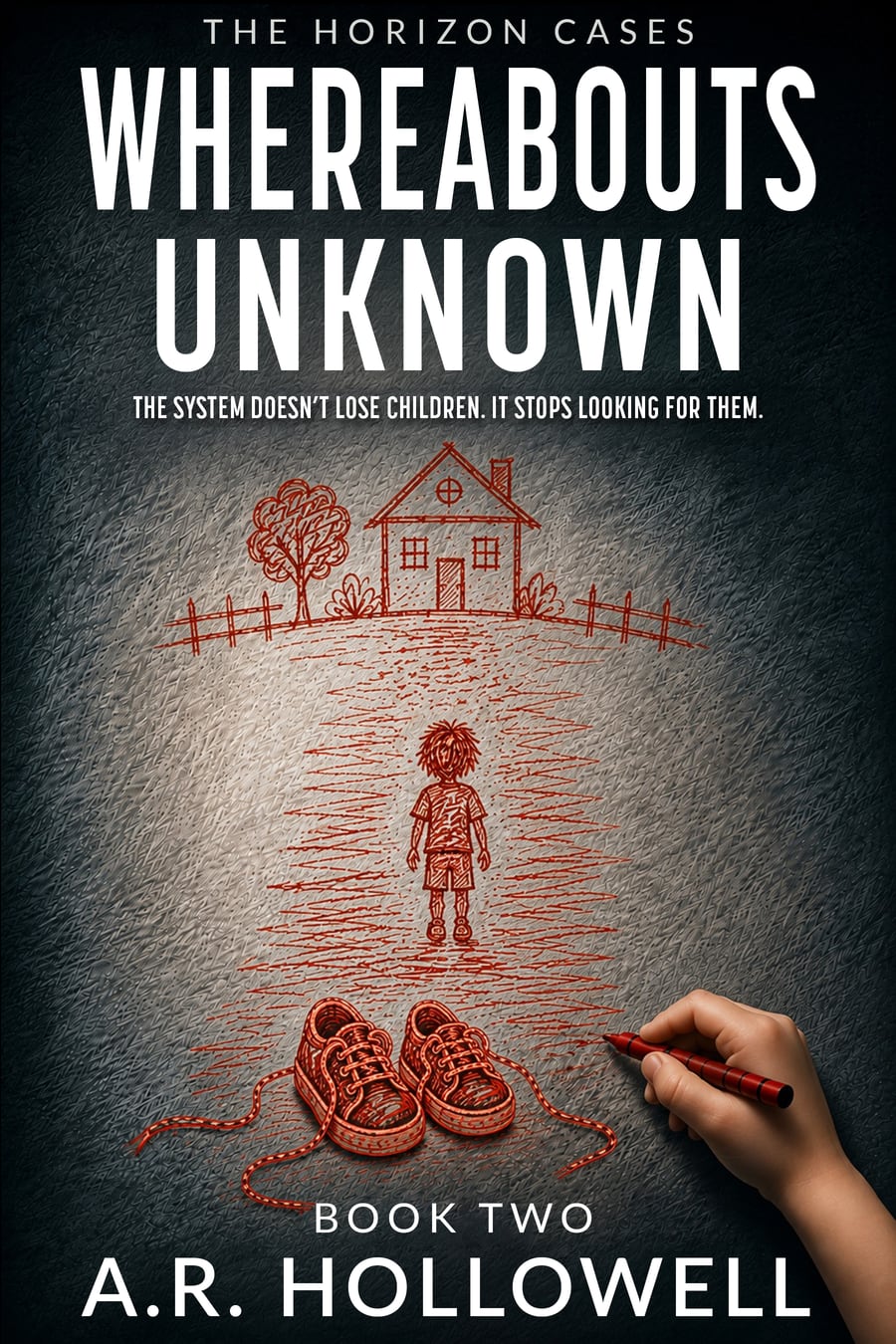
Book Two
Whereabouts Unknown
Kindle Unlimited- Pre-order
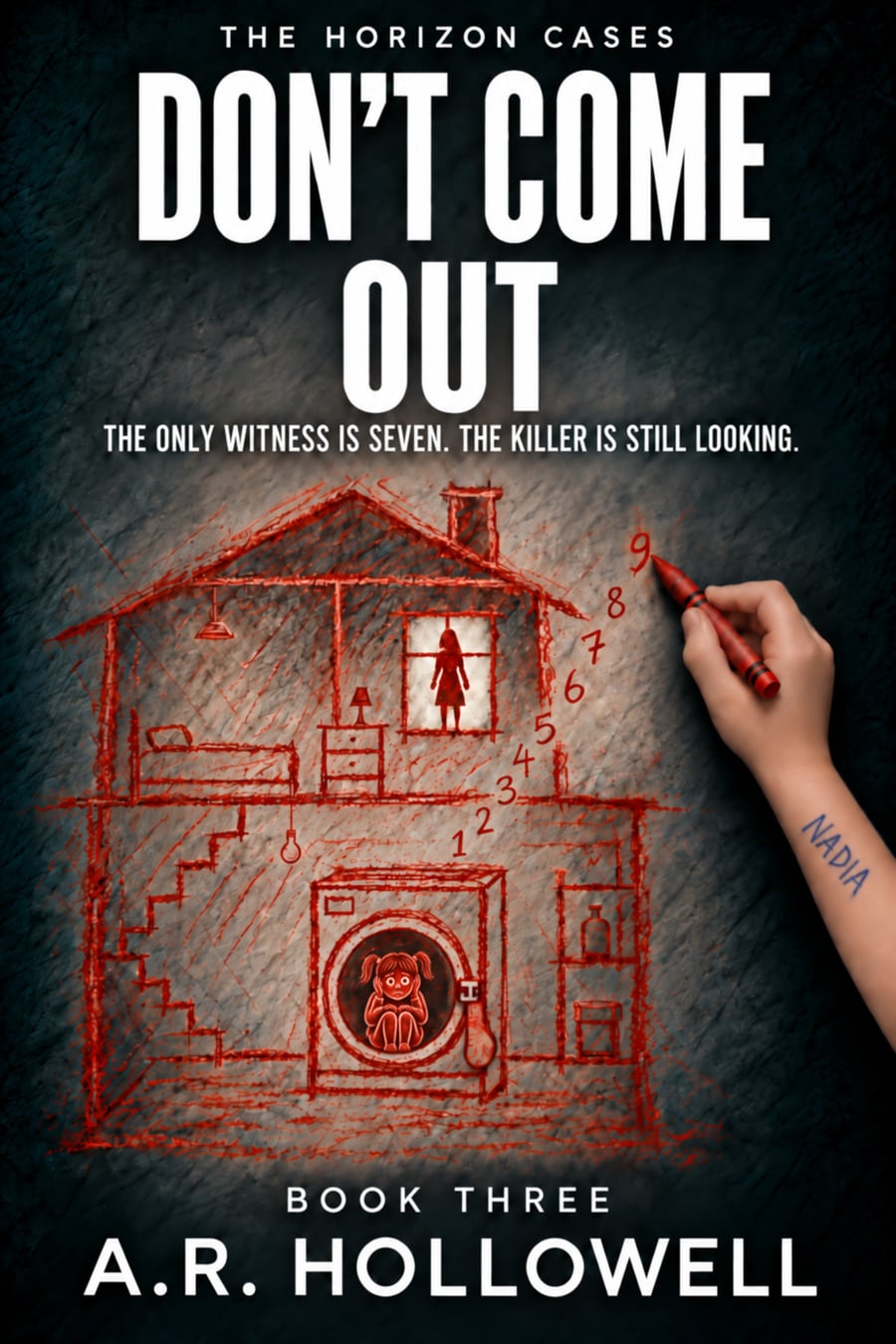
Book Three
Don't Come Out
Case file · Chapter One
Failure to Protect
8 min read
Later, she kept coming back to the rabbit. Gray, one ear torn, on the rug three feet from where Nadia stood, and no one bending to pick it up. Three feet. She could have crossed them.
That came in the fall.
The lake was black at 5:30 in the morning. Not the gray of an overcast afternoon, not the postcard blue they sold downtown. Black, the kind that swallowed the horizon and gave nothing back, so the only way Nadia knew where the water stopped, and the sky started, was the row of lights along the Promontory Point breakwall, thin and white against all that nothing.
She ran south. Hyde Park behind her, the Museum of Science and Industry a gray shape on her right, the path empty except for one other runner a half mile ahead, a man with the long, careless stride of someone running toward something or away from it and not much minding which. Her own stride said neither. It said this hour belonged to her, and she was using it.
Her feet hit the asphalt in a rhythm she no longer had to think about. Breath in through the nose, out through the mouth, the September air cool enough to feel good in her lungs and warm enough that she hadn’t needed the long sleeves she’d pulled on anyway. Lake Michigan was more presence than view. She could smell it, the mineral tang of deep water, and hear it, the low slap against the rocks below the path. The city sat behind her, where the city always sat. The run was what she did before it caught up.
She reached the point and turned. The breakwall curved into the water like a fist, the benches empty, the grass wet, the east showing a thin line of gray that was not light yet but the promise of it. She did not stop. She never stopped at the point. Stopping meant standing still, and standing still meant thinking. There was the caseload to think about, and under the caseload, deeper down, an older place the running was supposed to keep her clear of. It never quite did. There was a part of her that the running couldn’t reach. She had made her peace with not reaching it by keeping her feet moving.
She ran north. Back toward the apartment. Back toward the day.
The apartment sat on 53rd Street, the second floor of a walk-up that had been student housing when she moved in during her MSW and had become just housing in the six years since. One bedroom. A kitchen that doubled as a hallway. A bathroom window that didn’t close all the way, which made the room fifty-eight degrees in January and had taught her to shower fast.
Ruth was on the counter when she came through the door, still breathing hard from the stairs. The cat, gray tabby, nine years old, named by Nadia’s mother after Ruth Bader Ginsburg in a fit of optimism that had outlasted its subject, watched her and did not move. Ruth knew the sequence. Stretch first, then the water straight from the Brita pitcher, then the feeding. Ruth could wait. Ruth always could.
She drank. She stretched, hamstrings against the counter, one hand on the doorframe. She fed the cat. She showered. She stood at the closet and chose what she always chose: dark slacks and a blouse that could survive a car seat, a home visit, and a courtroom without looking like it had, flat shoes with rubber soles that made no sound on linoleum, because half her job happened on linoleum.
She pulled her hair back and looked at herself in the mirror. Brown eyes. The face her brother Darius called her deciding face, jaw set, mouth a line, the look of a woman about to tell someone something they didn’t want to hear. Darius wasn’t wrong. Most days, the job made her exactly that. He’d called Sunday, asking again why she never talked about before, about the years he only had pieces of, and she had turned it into a joke about his cooking and gotten off the phone. He let her. He always let her, which was its own kind of knowing.
The messenger bag waited on the desk by the window, canvas, brown, the strap fraying where it met the buckle. Inside: three case files she’d carried home to finish, a legal pad, two pens, a charger, her DCFS badge, and a granola bar she’d been carrying for four days and would carry for four more. She picked it up. She said goodbye to Ruth, who did not acknowledge it, and went down the stairs and into the morning.
The Honda Civic sat three spots east of the building, close for this block. Ten years old, gray, a dent in the rear quarter panel from a Loop parking garage she’d never fixed because the estimate came to four hundred dollars and the dent didn’t affect the driving. The passenger seat held a plastic file box, the overflow the bag couldn’t take. The back seat held a car seat, not for a child of her own. For emergencies. Sometimes a caseworker transported a child, and sometimes that wasn’t planned, and buying one at a Target while a three-year-old waited in the back, wrapped in a blanket, was not something she was willing to do twice.
The engine turned over on the second try, better than on Thursday. The car smelled of yesterday’s coffee and hand sanitizer, the pump bottle wedged by the console. She used the sanitizer more than the coffee. At every home visit, at every doorknob in every apartment on the South Side, the sanitizer stood between her body and the accumulated surfaces of other people’s lives. She didn’t think about it anymore. She pumped and rubbed and drove.
North on Lake Shore, west on 55th, south on the Dan Ryan to the field office. Twenty-two minutes without traffic, forty with. This morning, it ran thirty-one, which put her at her desk by seven-fifteen, early, normal, the only way to start a day that would fill regardless.
The field office occupied a building that had been other things first, a church or a community center or a furniture warehouse, depending on who was telling it. Now it was fluorescent light and cubicles and files stacked on every flat surface, including surfaces not meant to be flat, like the narrow ledge above the bathroom door where three intake folders had balanced for six months without anyone moving them.
She badged in. Carl, sixty-something, retired CPD, working the Sun-Times with a highlighter, nodded without looking up. The elevator was broken again, so it was the stairs. Her legs reminded her about the run, an awareness that would fade by nine when she became only what carried the bag and knocked on doors.
Third floor. The bullpen. Eight cubicles, six occupied, two empty since August when two caseworkers quit, and the positions went unfilled and would stay that way until November if they filled at all. The office smelled of coffee, this morning’s, from the machine Patricia had bought with her own money after the state-issued one died in March and its replacement stayed “in process.”
Patricia’s door was open. Patricia Okafor’s door was always open, not a philosophy but a practical fact, because a closed door made the bullpen assume a firing, and the assumption cost more of her time to manage than any meeting was worth. So it stayed open, and she was already behind the desk that vanished under files, a green wrap over her hair, reading glasses pushed up on her forehead, a pen moving across a form without her looking at it. Twenty years had made the motion automatic. She was usually watching whoever had appeared in her doorway instead.
This morning, no one had. Nadia passed the open door, and Patricia glanced up, and the glance was the morning check. You’re here. You’re upright. The day hasn’t broken you yet. Nadia nodded. Patricia nodded back. It took less than a second and carried more than most conversations did.
Her cubicle was third from the window. The glass faced south, toward the neighborhoods where most of her cases lived, Englewood, Back of the Yards, and Bridgeport, though all it showed her was a parking lot and the rear of a Walgreens. She knew the blocks were out there anyway, the same as she’d known the lake was beside her in the dark, a presence that shaped the map of her days.
She sat. She logged in. The screen took eleven seconds, which she knew because she counted it every morning, not out of impatience but as a ritual, eleven seconds of the system loading itself into her.
Then the calendar, filling as she watched. Two home visits. A permanency hearing at one on a nine-year-old who had asked her, last time, whether he could just live in both houses, and she’d said she would look into it, and there was nothing to look into, because the system did one house or the other, and the choosing was what broke people. A school meeting at three. And under all of it, twenty-eight cases, the number she kept in her head and nowhere else, because a number on a spreadsheet is a caseload and a number in your head is a set of faces.
Twenty-eight. She knew which ones drew her pictures and which ones hid behind their mothers when she knocked. One of them she hadn’t laid eyes on in almost three weeks, the twins down in Austin, six years old, a placement she had signed off on herself. The boy flinched when a man raised his voice. The girl went quiet, and that quiet stayed with Nadia, because a child who flinches is still telling you something, and a child who goes silent has already decided that telling doesn’t help. She would get out there this week. She told herself that most weeks.
She opened her email. Fourteen new since last night, court date changes and a licensing update and one more memo about documenting everything on time. She started working down the list. Seven-forty. The bullpen filled in around her, keyboards and the burr of the coffee machine and a phone going unanswered two cubicles down.
Twenty-eight cases. The calendar packed end to end, the day already loaded and still climbing. And somewhere out past the Walgreens and the parking lot, on a South Side block she had not driven to yet, a phone was being lifted off its hook. The machine was fast at this part: the receiving, the coding, the routing, smooth and well-oiled at exactly the place where it took a stranger’s worst morning and turned it into a case number. In an hour, maybe two, it would hand her one more, whether she was ready or not. She would take it. Taking it was the job.
Reader Reviews
Readers Also Ask
14 questions about this book
Question 01 / 14
What is Failure to Protect about?
Chicago child-welfare caseworker Nadia Cole investigates a neglect report on four-year-old Alma Varela and finds a loving, sober, ordinary family. The report is false, but the system removes Alma anyway, and Nadia has to fight to bring her home before the damage becomes permanent.
Chicago child-welfare caseworker Nadia Cole investigates a neglect report on four-year-old Alma Varela and finds a loving, sober, ordinary family. The report is false, but the system removes Alma anyway, and Nadia has to fight to bring her home before the damage becomes permanent.
Nadia is a caseworker who reads the file instead of just closing it. She has worked inside the system for six years, and she has a personal reason she cannot let this child go: she grew up in foster care herself.
Yes. Alma’s case begins and ends in this book. It is also Book One of The Horizon Cases, and the final pages show Nadia arriving at her next case.
No. The Horizon Cases is a separate series with its own characters. It shares the author and the same focus on systems that are meant to protect people and sometimes harm them.
It is told in the third person, mostly through Nadia, with other perspectives that let you see what is happening to Alma and her mother while Nadia fights the system.
In Chicago, inside the world of the state child-welfare system: hotline reports, home visits, court hearings, and foster placements.
The story is built on how reports, investigations, and temporary custody decisions actually move through the system, which is what makes a false report so dangerous.
There is very little on-page violence. The harm in this story is emotional: a small child separated from her mother and changing in a foster home that looks perfect on paper.
A child removed from her family on false reports, emotional neglect of a young child in foster care, a mother’s distress, and the main character’s memories of her own childhood in care. There are no scenes of sexual abuse.
There are no sex scenes, and the language is mild, with no f-words.
About 290 pages, roughly 83,000 words, in 46 chapters across three parts: The Report, The Yellow Room, and The Reckoning.
Book Two, Whereabouts Unknown, opens on the case Nadia walks into at the end of this book.
Readers of Jodi Picoult, Lisa Jewell, and Lisa Scottoline, and anyone who loves a fierce protagonist fighting a system from the inside.
Yes. Signed hardcover and paperback editions are available in the Signed Collection on this site, for delivery in the United States.